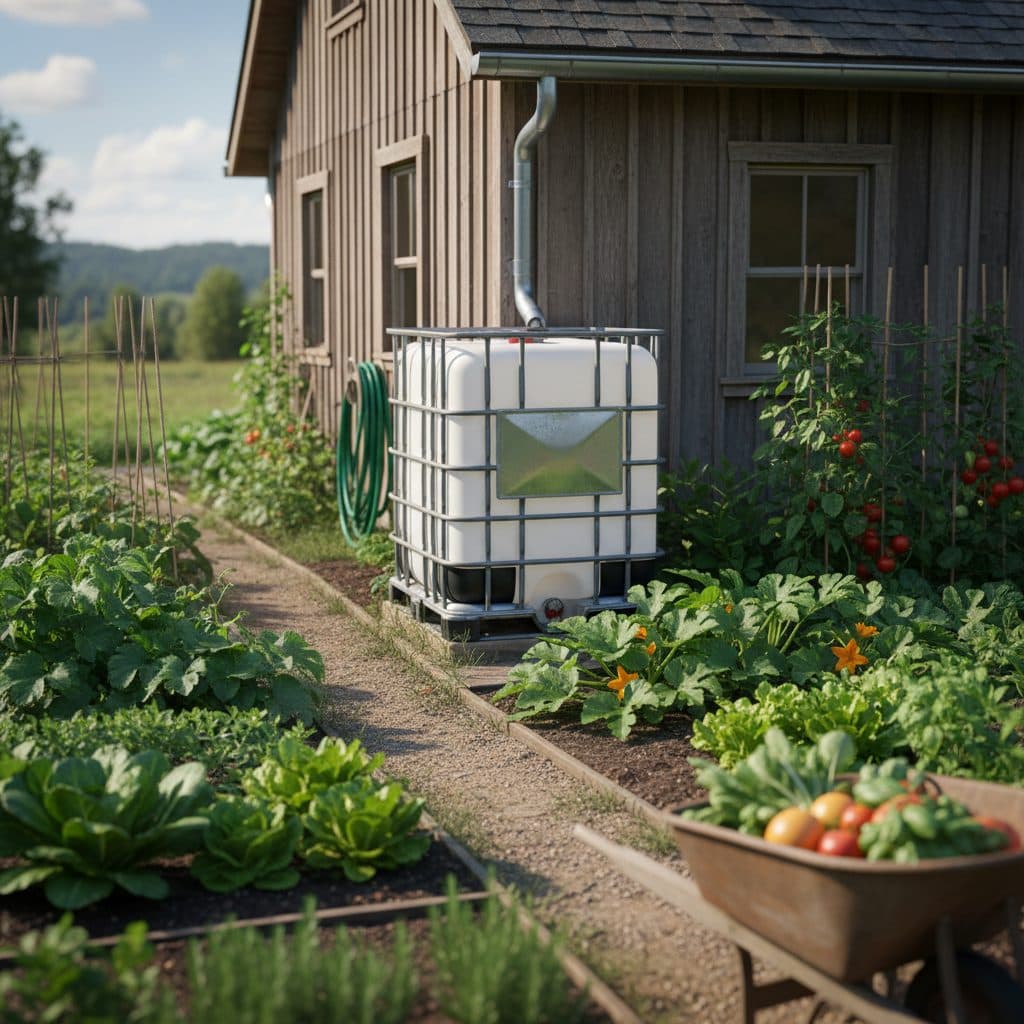
Key takeaways
- Select a food-grade IBC tote, typically 275 or 330 gallons, to ensure water safety for garden use.
- Install a durable spigot, preferably a 2-inch bulkhead fitting with a 3/4-inch ball valve, for easy water access.
- Design an overflow system to direct excess water away from the foundation, preventing erosion and managing up to 300 gallons of overflow per heavy rain.
- Implement a fine mesh screen, 60-mesh or finer, to prevent mosquito breeding and debris entry in regions like Florida.
- Regularly inspect and clean your IBC tote system, especially the screen and spigot, to maintain water quality and system longevity for 10+ years.
- Integrate harvested water with passive irrigation methods like ollas or wicking beds to reduce municipal water use by up to 50%.
Quick answer: To set up a food-safe IBC tote for water harvesting, select a food-grade tote, install a durable spigot (e.g., 2-inch bulkhead with 3/4-inch ball valve), implement an overflow system, and add a fine mesh screen to prevent debris and mosquitoes.
In USDA zone 7b, where summer droughts can stress even established gardens, capturing rainwater is a practical strategy. A single 1,000 square foot roof can shed roughly 620 gallons of water for every one inch of rainfall. Using a food-safe intermediate bulk container (IBC) tote offers a high-capacity option for growers looking to store this water. These totes, often holding 275 or 330 gallons, provide a reservoir for irrigation, reducing reliance on municipal water supplies and lowering utility bills by 20% or more during peak growing seasons.
Converting an IBC tote into a functional water harvesting system involves a few modifications: adding a reliable spigot for dispensing, installing an overflow mechanism to manage excess water, and integrating a mosquito screen to prevent pest breeding and keep debris out. These steps keep the system safe, efficient, and low-maintenance, providing a consistent water source for your vegetables, herbs, and fruit trees, even through dry spells that can last for two to three weeks in the Mid-Atlantic region.
Choosing the right food-safe IBC tote
When selecting an IBC tote for water harvesting, checking its previous contents is critical to safety. You must choose a food-grade IBC tote that previously held potable liquids like food-grade glycerin, soy sauce, or liquid sweeteners. Avoid totes that contained chemicals, oils, or hazardous materials, as residues can contaminate your harvested water, making it unsuitable for garden use. A typical food-grade tote will have a label indicating its previous use, often with a UN code and a reference to food-grade materials. These totes usually come in standard sizes, either 275 gallons or 330 gallons, measuring approximately 48 in long, 40 in wide, and 46 in high, making them a significant water storage solution for a backyard or small farm.
Inspecting your tote for longevity
Before purchase, thoroughly inspect the tote for structural integrity. Look for cracks, punctures, or significant warping in the plastic bladder. The metal cage should be free of severe rust or damage, as it provides structural support. Many used totes are available for $100 to $250, depending on their condition and location, often found through local industrial suppliers or online marketplaces. A well-maintained tote can last for 10 to 15 years, providing a long-term return on your initial investment. Ensure the tote’s plastic is opaque or dark-colored to minimize algae growth, which thrives in sunlight and can reduce water quality over time. Rainwater harvesting is a practice that benefits from proper storage vessel selection.
- Confirm previous contents were food-grade.
- Inspect plastic bladder for damage or leaks.
- Check metal cage for rust or structural issues.
- Choose opaque or dark-colored plastic to inhibit algae.
- Verify inlet and outlet valve integrity.
Installing the spigot for easy access
A reliable spigot allows you to draw water easily from your IBC tote. The most common and durable method involves installing a bulkhead fitting directly into the tote’s plastic bladder. For most applications, a 2-inch bulkhead fitting with a 3/4-inch ball valve is ideal, providing good flow rate for garden hoses. You’ll need a suitable hole saw, typically 2.5 to 3 inches in diameter, to cut the opening near the bottom of the tote, ensuring all water can drain. Position the spigot about 2 to 4 inches from the bottom to allow for some sediment accumulation without blocking the outlet. The fitting should be tightened securely with rubber gaskets on both sides to create a watertight seal, preventing leaks that could waste 5 to 10 gallons per day.
Securing the connection and preventing leaks
After drilling, smooth any rough edges around the hole to ensure the gasket seats properly. Apply a thin layer of silicone sealant, specifically rated for potable water, around the gaskets before tightening the bulkhead fitting. This extra step can prevent slow drips and ensure a long-lasting seal, even under the pressure of 275 gallons of water. A standard 3/4-inch garden hose can then be attached to the ball valve, allowing you to fill watering cans or connect to an expandable hose with a 7-pattern spray nozzle for broader irrigation. Remember that cast iron spigot and socket pipes are often specified for durability in industrial applications [2], but for IBC totes, plastic or brass bulkhead fittings are more practical and corrosion-resistant. Ensure the spigot is sturdy enough to handle frequent use, as a cheap plastic spigot might fail within a single season.
- Use a 2-inch bulkhead fitting with a 3/4-inch ball valve.
- Drill a clean hole 2 to 4 inches from the tote’s bottom.
- Apply potable-grade silicone sealant to gaskets for a watertight seal.
- Connect a standard 3/4-inch garden hose for dispensing.
- Test for leaks immediately after installation with 5-10 gallons of water.
Adding an overflow system for water management
An effective overflow system prevents your IBC tote from rupturing or overflowing uncontrollably, especially during heavy rain events common in regions like the Pacific Northwest, where 3 to 5 inches of rain can fall in a single day. Without an overflow, a 330-gallon tote can quickly exceed its capacity, potentially causing structural damage to the tote or flooding the surrounding area. The simplest method involves cutting a hole near the top of the tote, about 2 inches below the main inlet, and installing another bulkhead fitting (typically a 1.5-inch or 2-inch PVC fitting). This allows you to attach a PVC pipe or flexible hose to direct excess water away from your home’s foundation, preventing erosion or basement flooding.
Directing overflow water responsibly
The overflow pipe should be directed to a permeable area, such as a rain garden, a swale, or a French drain, at least 10 feet away from any building foundation. In areas with steep slopes, like parts of Appalachia, directing this water into a series of small, terraced earthworks can help slow its flow and allow it to infiltrate the soil, recharging groundwater. You might also consider connecting multiple IBC totes in series, allowing the overflow from the first to fill the second, thereby increasing your total storage capacity to 600 gallons or more. This strategy is especially useful in areas where average annual rainfall exceeds 40 inches. Proper overflow management prevents water waste and protects your property from potential water damage, which can cost hundreds of dollars in repairs. Solar water pumps for wells and irrigation can also be used to move this overflow water to higher ground or distant garden beds.
- Install an overflow fitting 2 inches below the main inlet.
- Use a 1.5-inch or 2-inch PVC bulkhead fitting.
- Direct overflow water at least 10 feet from foundations.
- Consider rain gardens or swales for water dispersal.
- Connect multiple totes in series for increased storage capacity.
Integrating a mosquito screen for health and water quality
Mosquitoes are vectors for diseases like West Nile virus, which has been reported in all 48 continental US states. An unscreened IBC tote can become a breeding ground for thousands of mosquitoes in just a few days, as female mosquitoes lay their eggs directly on the water’s surface [3]. To prevent this, a fine mesh screen is needed. Cover all openings (the main inlet, the overflow, and any vents) with a 60-mesh or finer screen. This mesh size is small enough to block adult mosquitoes, which typically have a body length of 0.12 to 0.4 inches, from entering and laying eggs. Hardware cloth with 1/16-inch openings is generally too coarse for effective mosquito control.
Maintaining a pest-free water supply
Secure the screen tightly using hose clamps, zip ties, or a custom-built frame to prevent gaps larger than 1/32 inch. Regular inspection, at least once a month, ensures the screen remains intact and free of debris. Leaves, twigs, and other organic matter can accumulate on the screen, reducing water flow and potentially creating small pools where mosquitoes can still breed. In areas with high mosquito populations, such as coastal regions of Louisiana or Florida, consider adding a small amount of Bti (Bacillus thuringiensis israelensis) dunks or granules to the water. Bti is a naturally occurring bacterium that specifically targets mosquito larvae, offering a safe and effective control method without harming other organisms or water quality. This proactive approach helps protect your family and community from mosquito-borne illnesses, which cost the US economy millions annually in healthcare and prevention [1].
- Cover all openings with 60-mesh or finer screen.
- Secure screens tightly to prevent gaps.
- Inspect screens monthly for damage or debris.
- Consider Bti dunks in high mosquito areas.
- Ensure screens are sturdy enough to withstand wind and wildlife.
Maintenance, usage, and integrating passive irrigation
Once your IBC tote system is set up, regular maintenance ensures its longevity and the quality of your harvested water. At least twice a year, or after periods of heavy use, drain the tote completely and rinse out any accumulated sediment. A 275-gallon tote can accumulate 1 to 2 inches of sludge at the bottom over a growing season, which can clog your spigot or reduce water quality. Inspect all fittings, hoses, and screens for wear and tear, replacing any components that show signs of degradation. In colder climates, like USDA zone 5, it’s important to completely drain the tote before the first hard freeze to prevent ice expansion from damaging the plastic bladder, which can crack at temperatures below 20°F.
Maximizing water use with passive irrigation
Harvested rainwater is ideal for passive irrigation methods, which significantly reduce water waste and labor. Ollas, unglazed clay pots buried in the soil, slowly release water directly to plant roots, providing consistent moisture for 5 to 7 days on a single fill. A 330-gallon IBC tote can supply enough water for 10 to 15 ollas for several weeks, depending on plant needs and climate. Wicking beds, another efficient system, use a water reservoir at the bottom, drawing moisture upwards through capillary action. This method can reduce water consumption by up to 50% compared to traditional surface irrigation. By combining your IBC tote with these methods, you create a resilient, low-impact irrigation system that supports healthy plant growth while conserving water. The USDA Natural Resources Conservation Service [6] promotes water conservation practices for agriculture, recommending systems like these for growers across the country.
- Drain and rinse the tote twice annually to remove sediment.
- Inspect all fittings and screens for wear and replace as needed.
- Drain completely in USDA zone 5 before freezing temperatures.
- Utilize harvested water with ollas for efficient root-zone irrigation.
- Employ wicking beds to reduce water consumption by up to 50%.
IBC Tote vs. Standard Rain Barrel for Water Harvesting
Feature | Standard Rain Barrel (50-60 gallons) | Food-Safe IBC Tote (275-330 gallons) |
|---|---|---|
Capacity | 50-60 gallons | 275-330 gallons (5-6x more) |
Footprint (approx.) | 2 ft diameter, 3 ft high | 4 ft long, 3.3 ft wide, 3.8 ft high |
Cost (used) | $70-$150 | $100-$250 |
Maintenance | Annual cleaning, screen check | Bi-annual cleaning, more durable fittings |
Durability | 5-10 years | 10-15 years |
Water Savings: A 330-gallon IBC tote can reduce municipal water usage for irrigation by up to 50% during the growing season, saving an average homeowner $50-$100 annually.
Mosquito Prevention: Using a 60-mesh screen on all openings prevents 100% of adult mosquitoes from entering and breeding, stopping the production of thousands of larvae per week.
Frequently asked questions
How much water can a typical IBC tote hold?
Most IBC totes used for water harvesting hold either 275 gallons or 330 gallons. This capacity is significantly more than a standard 50-gallon rain barrel, allowing for extended irrigation during dry periods.
Is a food-grade IBC tote truly safe for garden water?
Yes, a food-grade IBC tote that previously contained potable liquids like food-grade glycerin or soy sauce is safe. Always verify the previous contents to avoid contamination, ensuring your plants receive clean water.
What kind of screen is best for preventing mosquitoes?
A 60-mesh or finer screen is recommended for all openings to effectively block mosquitoes. This mesh size prevents adult mosquitoes, which are typically 0.12 to 0.4 inches long, from entering and laying eggs.
How often should I clean my IBC tote?
It’s best to drain and rinse your IBC tote at least twice a year, or after periods of heavy use, to remove accumulated sediment. This practice helps maintain water quality and prevents clogs in your spigot.
Can I connect multiple IBC totes together?
Yes, you can connect multiple IBC totes in series using overflow pipes. This method significantly increases your total water storage capacity, allowing you to collect 600 gallons or more from your roof.
References
- Developing a Preventative Screen to Detect Heartworm DNA in Mosquito Populations (2026). Developing a Preventative Screen to Detect Heartworm DNA in Mosquito Populations.
- Specification for cast iron spigot and socket pipes (vertically cast) and spigot and socket fittings (2023). Specification for cast iron spigot and socket pipes (vertically cast) and spigot and socket fittings.
- Figure 4: Ovary of mosquito with yolk (A) before and (B) after adding water to the dry preparation. (2023). Figure 4: Ovary of mosquito with yolk (A) before and (B) after adding water to the dry preparation..
- Specification for cast iron spigot and socket pipes (vertically cast) and spigot and socket fittings (2023). Specification for cast iron spigot and socket pipes (vertically cast) and spigot and socket fittings.
- Figure 4 from: Li S, Zhao Q (2012) Eleven new species of theridiosomatid spiders from southern China (Araneae, Theridiosomatidae). ZooKeys 255: 1-48. https://do (2023). Figure 4 from: Li S, Zhao Q (2012) Eleven new species of theridiosomatid spiders from southern China (Araneae, Theridiosomatidae). ZooKeys 255: 1-48. https://do.
- USDA Natural Resources Conservation Service (2024). USDA Natural Resources Conservation Service.