Key takeaways
- The zaid summer season (March to June) requires heat-tolerant crops capable of thriving in intense temperatures between 35°C and 45°C.
- Gourds (bottle gourd, ridge gourd, bitter gourd, snake gourd), bhindi (okra), cowpeas (lobia), and brinjal are India's premier summer performers.
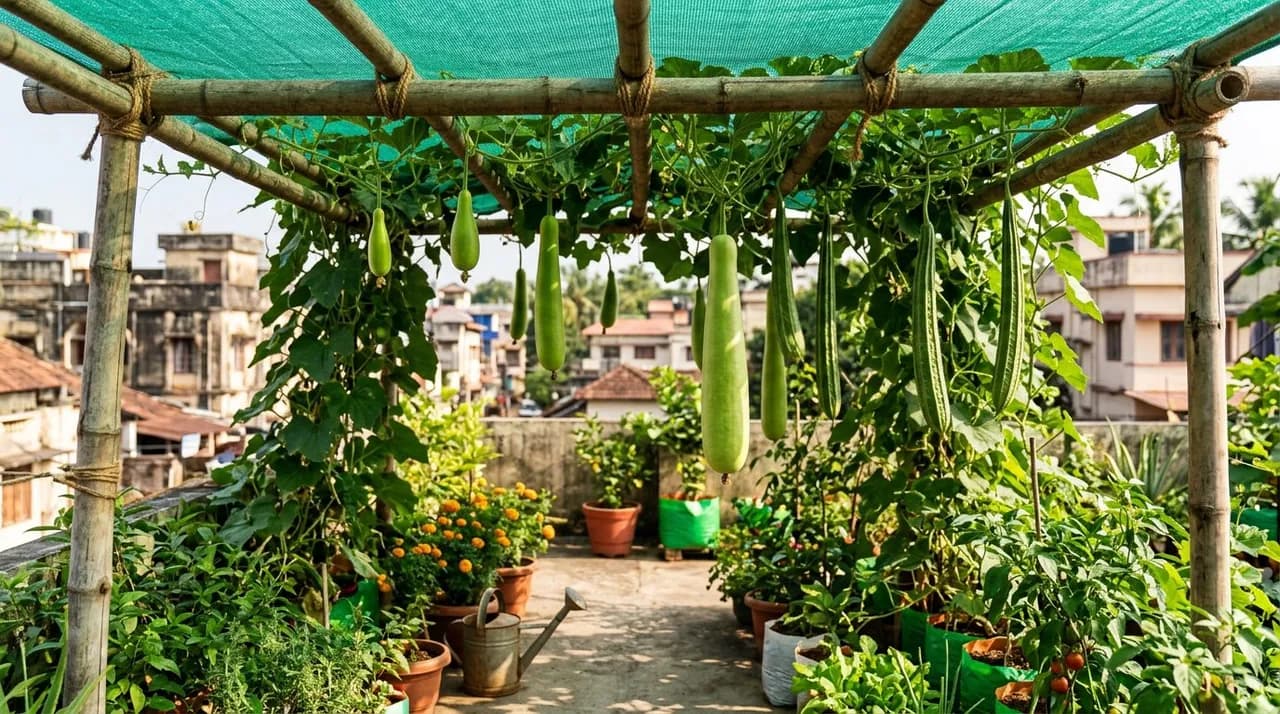
- Install a 50% green agro-shade net 2.5 metres above rooftop grow bags to prevent flower abortion, leaf scorch, and container desiccation.
- Water twice daily (at early dawn and sunset), soaking the root zone while avoiding overhead watering during peak afternoon heat.
- Mulch the soil surface of every container with a 5 cm layer of dry leaves, straw, or sugarcane bagasse to keep root zones cool.
Quick answer: The best summer vegetables in India grown during the zaid season include bottle gourd (lauki), ridge gourd (turai), bitter gourd (karela), bhindi (okra), brinjal, green chillies, cowpeas (lobia), and Malabar spinach. Timing shifts with region: southern and coastal India sows the summer crop from about December to February; the northern and central plains from February into early March, so plants are established before the loo sets in; hill gardens sow from April into May. Work back from when your own local heat peaks rather than to a single national date.
Growing summer vegetables in india presents the ultimate test for home gardeners. Known in Indian agriculture as the zaid season, the months spanning March through June bring scorching sunshine, arid heatwaves, and hot dry winds (loo) across the northern and central plains, with temperatures across the northern and central plains routinely above 40°C, and peaks in the mid-40s in the driest belts. In coastal cities like Mumbai, Chennai, and Kolkata, high ambient heat combines with stifling humidity.
On urban rooftops and concrete balconies, the heat challenge is amplified. Unprotected concrete slabs absorb solar thermal energy all day, radiating intense heat into container root zones and baking dry potting soil within hours. Cool-season crops like spinach, carrots, and peas quickly bolt, scorch, and perish under these conditions.
However, traditional Indian horticulture has an extensive selection of native and naturalised heat-tolerant vegetables that thrive under summer skies. By installing protective shade netting, mulching container surfaces, and choosing drought-resilient crops, you can maintain a productive garden through the hottest months of the year.
Surviving 40°C+ heat on Indian rooftops and balconies
Gardening on a concrete terrace at 42°C requires strict microclimate management to protect container root zones:
+-----------------------------------------------------------------+
|                    [Rooftop Summer Defense]                     |
|                                                                 |
|   ~~~~~ 50% Green Agro-Shade Net ~~~~~~~~~  |
|                                                                 |
|   ================ Heavy Trellis Climbers ===================== |
|   (Bottle Gourd, Ridge Gourd, Bitter Gourd, Cucumber)           |
|                                                                 |
|   5 cm Dry Leaf / Straw Mulch (Keeps root zone cooler, slows)   |
|   -----------------------------------------------------------   |
|   [Lightweight Coco Peat & Vermicompost Mix]                    |
|   -----------------------------------------------------------   |
|   === Elevated Bricks (Air Gap Above Hot Concrete) ============ |
|   ================ Concrete Roof Slab ========================= |
+-----------------------------------------------------------------+
1. Installing a 50% HDPE green agro-shade net
Direct midday solar radiation can heat the surface of black or dark green grow bags above 50°C, cooking delicate root hairs:
- Suspend a 50% high-density polyethylene (HDPE) green shade net 2.5 metres above the terrace floor.
- A 50% net cuts the worst of the direct radiation and noticeably lowers the temperature under the canopy, which reduces blossom drop on fruiting crops without depriving sun-loving gourds of photosynthetic light.
2. Deep mulching and slab elevation
- 5 cm surface mulch: Cover every grow bag and pot with a generous layer of crushed dry leaves, sugarcane bagasse, or straw. Mulch prevents surface crusting and sharply slows evaporation from the mix.
- Elevating on bricks: Never let grow bags sit directly on bare concrete. Elevate pots on pairs of red bricks or interlocking plastic drainage tiles to create an insulating air gap that prevents conductive heat transfer from the blazing roof slab.
3. Siting and grouping containers
Group containers tightly together in clusters. As plants transpire, their combined foliage creates a humid, cooler microclimate that reduces moisture stress.
For structural safety and layout foundations on urban roofs, review our guide on terrace garden design in India.
Complete zaid vegetables list: what to sow for the hot months
Knowing vegetables to sow in march april allows you to plant crops at the exact moment rising spring temperatures accelerate germination:
+-------------------+--------------------+------------------+-------------------------+
| Vegetable Group   | Indian Desi Names  | Sowing Method    | Container Requirements  |
+-------------------+--------------------+------------------+-------------------------+
| Gourds & Climbers | Lauki, Turai,      | Direct seed      | 45x45 cm grow bag       |
|                   | Karela, Chichinda  | (1-2 seeds/bag)  | with vertical trellis   |
+-------------------+--------------------+------------------+-------------------------+
| Malvaceae &       | Bhindi (Okra),     | Direct (Bhindi) /| 30x30 cm grow bag       |
| Solanaceae        | Brinjal, Chilli    | Transplant       | (1 plant per bag)       |
+-------------------+--------------------+------------------+-------------------------+
| Legumes           | Lobia (Cowpea),    | Direct seed      | 35x35 cm grow bag       |
|                   | Gawar (Cluster)    | (3-4 seeds/bag)  | with bamboo stakes      |
+-------------------+--------------------+------------------+-------------------------+
| Summer Greens     | Chaulai (Amaranth),| Direct broadcast | Shallow 60x30x15 cm     |
|                   | Poi Saag, Kulfa    | (thin sprinkle)  | rectangular trays       |
+-------------------+--------------------+------------------+-------------------------+
| Melons & Cucurbits| Tarbooj, Kharbooja,| Direct seed      | 50x50 cm large drum     |
|                   | Kakdi, Kheera      | (heavy feeder)   | with horizontal frame   |
+-------------------+--------------------+------------------+-------------------------+
1. The gourd family (Cucurbitaceae)
Gourds are the undisputed champions of the Indian summer. Their vigorous vines, broad sun-absorbing leaves, and deep root networks produce heavy yields in high heat:
- Lauki / Ghiya (Bottle Gourd - Lagenaria siceraria): Extremely high water content and rapid growth. Provide a sturdy overhead bamboo trellis or nylon mesh trellis.
- Turai / Tori (Ridge Gourd & Sponge Gourd): Prolific climbers that produce tender, ribbed gourds throughout summer and monsoon.
- Karela (Bitter Gourd - Momordica charantia): Thrives in scorching sun, but the fruit is a favourite of the melon fruit fly. Bag young fruit in newspaper or butter-paper sleeves once they are a few centimetres long, hang a cue-lure or basil-based trap, and pick up and destroy any fallen or stung fruit rather than composting it.
- Chichinda (Snake Gourd): Produces long, tender striped gourds that flourish in hot, humid weather.
- Kakdi (Armenian Cucumber) & Kheera: Crisp, refreshing salad crops that mature in 45 to 55 days.
2. Bhindi (ladies finger / okra)
Bhindi loves intense heat, germinating rapidly when daytime temperatures exceed 30°C. Sow 2 to 3 seeds directly into 30 cm by 30 cm grow bags, thinning to the single strongest plant. Pods develop in 50 to 60 days; harvest every 2 days when young and tender to encourage continuous flowering.
3. Solanaceous crops: brinjal and chillies
While tomatoes often drop blossoms when night temperatures exceed 28°C, desi round and long purple brinjal varieties and pungent green chillies continue fruiting reliably through peak summer.
4. Heat-resilient legumes: lobia and gawar phali
- Lobia (Cowpeas / Black-Eyed Peas): Vigorous bush and climbing varieties produce tender green pods while fixing nitrogen into depleted potting media.
- Gawar Phali (Cluster Beans): Highly drought-tolerant legume adapted to arid conditions across Rajasthan and Gujarat.
5. Heat-tolerant summer greens (saag)
Standard palak and methi bolt immediately in summer, but traditional summer greens thrive:
- Chaulai (Amaranth / Lal Saag - Amaranthus tricolor): Red and green varieties ready to harvest in 25 to 30 days.
- Poi Saag (Malabar Spinach - Basella alba): A thick, succulent climbing vine whose fleshy leaves taste similar to spinach and thrive in 40°C heat.
- Kulfa (Purslane): Crisp, tangy succulent green that grows wild or cultivated in hot container soil.
To contrast summer varieties with cool-season crops, review our companion guide to winter vegetables in India.
Summer soil preparation, potting mix, and container sizing
Potting soil for summer container gardening must balance water-holding capacity with rapid root aeration.
The summer potting mix formula
- 50% washed coco peat: Coco peat holds up to nine times its weight in water, preventing rapid moisture loss during hot afternoons.
- 30% aged vermicompost or well-rotted cow dung manure (Gobar ki Khaad): Delivers steady nutrition without burning tender root systems.
- 10% red soil or river sand: Adds mineral density and stabilizes containers against strong pre-monsoon winds.
- 10% organic amendments: 2 handfuls of neem cake powder (to prevent root nematodes and white grubs) and 100 g of bone meal per bag.
Container sizing for gourds and fruiting crops
- Vining Gourds: Large 45 cm by 45 cm (18x18 inch) or 50-litre grow bags to accommodate expansive root systems.
- Bhindi, Brinjal, and Chillies: Individual 30 cm by 30 cm (12x12 inch) grow bags.
- Summer Greens: Shallow rectangular trays measuring 60 cm by 30 cm with a depth of 15 cm.
For compact balcony spaces, consult our layout recommendations in small home terrace garden.
Summer watering rules and organic liquid feeding
Correct watering technique is the difference between thriving summer vines and scorched, dead plants:
+---------------------------------------------------------+
|                  [Summer Irrigation Rules]              |
|                                                         |
|   [Morning Feed (5:30 - 7:30 AM)]                       |
|   Soak soil deeply before the sun heats the slab        |
|                                                         |
|   [Midday Rule (11:00 AM - 4:00 PM)]                    |
|   NEVER spray cold water on scorching leaves (Scorches) |
|                                                         |
|   [Evening Top-Up (6:30 - 7:30 PM)]                     |
|   Gentle root soaking to help plants recover overnight  |
+---------------------------------------------------------+
1. Rules for summer watering
- Water early in the morning: Complete your primary watering between 5:30 AM and 7:30 AM before the sun heats the terrace. This ensures plants are fully hydrated before midday heat stress begins.
- Evening inspection: Check containers at sunset (around 6:30 PM to 7:30 PM). Give a light root soaking to any containers that have dried out, allowing plants to cool and rehydrate overnight.
- Never water overhead at noon: Spraying cold water onto sun-baked foliage at 1:00 PM causes thermal shock, scorches leaves, and humidifies the air around the canopy, triggering fungal leaf spot.
2. Organic liquid feeding in summer
Chemical synthetic fertilizers cause severe root burn in hot soil. Use gentle, cooling organic liquid drenches every 10 to 14 days:
- Jeevamrut or Panchagavya: Fermented traditional bio-enhancers diluted 1:10 with water.
- Vermiwash / Seaweed extract: Diluted in water and applied as a morning root drench to deliver micro-nutrients and plant growth hormones.
Incorporate heat-loving perennial culinary herbs alongside your summer vegetables with our dedicated guide on how to grow mint at home and fresh garnishing greens in how to grow coriander at home.