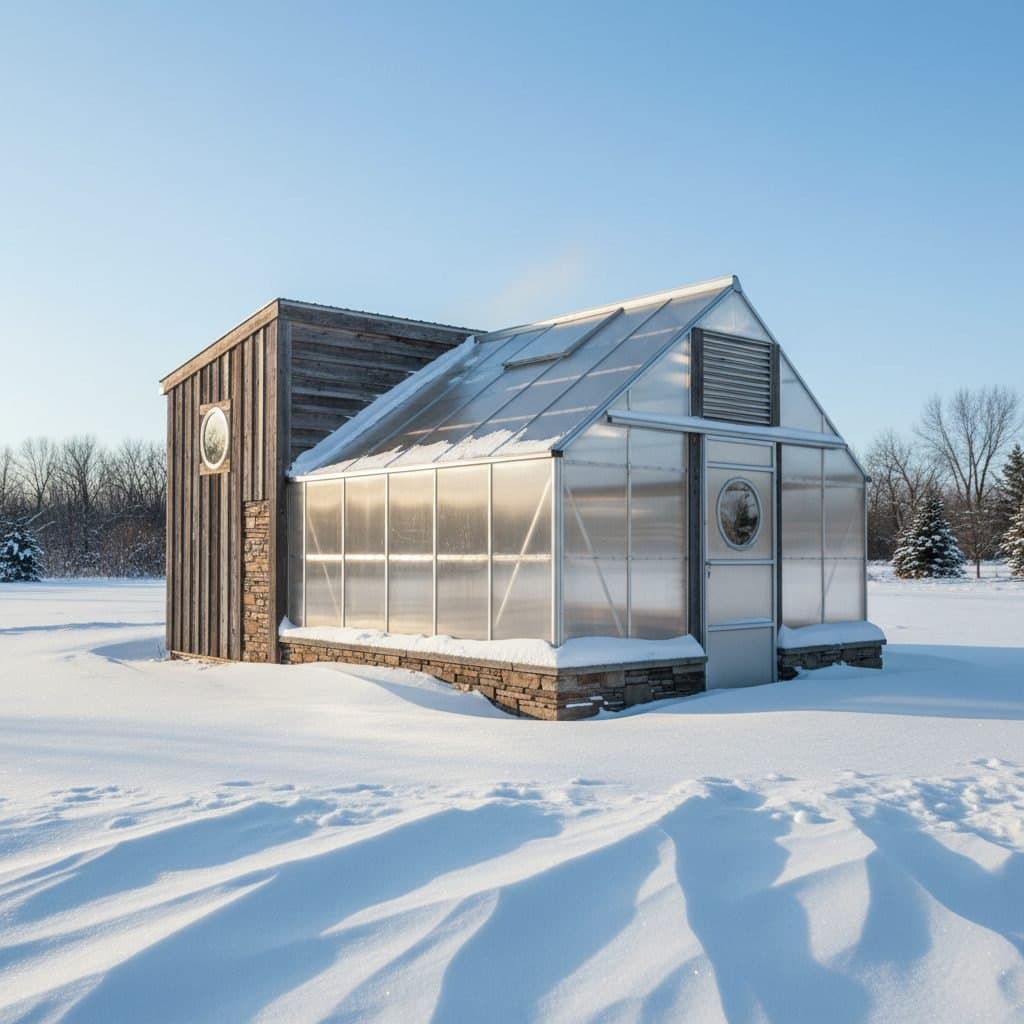
Key takeaways
- Orient your greenhouse with primary glazing facing within 15 degrees of true south for maximum solar gain.
- Incorporate significant thermal mass, like 55-gallon water barrels, to store daytime heat and release it at night.
- Choose durable, multi-layer glazing materials such as twin-wall polycarbonate for better insulation in cold climates.
- Design for proper ventilation to prevent overheating during warmer periods, even in winter.
- Consider an attached design to share heat with a dwelling and reduce overall heating costs by up to 50%.
- Budget for materials like treated lumber, polycarbonate, and water storage, with costs potentially ranging from $1,500 to $5,000 for a 100 square foot structure.
Quick answer: A passive solar greenhouse extends the growing season by capturing and storing solar energy to maintain warmer internal temperatures, reducing heating needs by 30-70%. This allows for year-round plant growth in cold regions like USDA Zone 5.
In the chilly winters of northern Michigan, where temperatures can drop to 0°F for weeks, extending the growing season past October often feels like a pipe dream. Many growers in USDA zones 4 and 5 face similar challenges, struggling to keep plants alive once the first hard frosts hit. However, with careful planning and a modest investment, a passive solar greenhouse or hoop house can transform your growing capabilities, allowing for fresh produce even when snow covers the ground. These structures harness the sun’s energy to maintain warmer internal temperatures, often reducing external heating needs by 30% to 70% compared to conventional designs [0, 1].
Building a year-round growing space does not require complex mechanical systems. Focusing on solar orientation, thermal mass, and appropriate glazing creates a stable growing environment through the winter months in regions like upstate New York or the high deserts of Colorado.
Passive solar greenhouse design for year-round growing
A passive solar greenhouse captures, stores, and distributes solar energy without mechanical assistance. The primary goal is to maximize solar gain during the day and minimize heat loss at night, especially crucial in colder climates like those found in USDA zones 3 through 6. This approach can reduce external heating needs by 30% to 70% compared to conventional greenhouse designs, as reported in studies from the late 1970s and early 2010s [0, 1]. For example, a well-oriented structure in Vermont could maintain internal temperatures 20°F to 30°F warmer than outside air on a sunny winter day.
Putting it into practice
The fundamental principle involves orienting the longest side of the greenhouse to face true south, ideally within 15 degrees east or west, to capture maximum low-angle winter sun. In the Northern Hemisphere, this south-facing glazing should be angled between 45 and 60 degrees from horizontal for optimal solar collection during the winter months [2, 4]. The north wall, conversely, should be heavily insulated and opaque to prevent heat loss, often built with an R-value of 20 or higher. This design strategy allows for significant heat accumulation, extending the growing season by up to six months in regions like USDA zone 5.
Key elements of a passive solar greenhouse include:
- South-facing glazing: Maximizes winter sun exposure.
- Thermal mass: Stores heat for nighttime release.
- Insulated north wall: Minimizes heat loss to the cold north.
- Proper ventilation: Prevents overheating during sunny periods.
- Foundation insulation: Reduces heat loss into the ground, especially important in areas with frozen soil.
Storing the sun’s warmth: thermal mass and effective glazing
Once solar energy enters the greenhouse, it needs to be stored for release after sunset. This is the function of thermal mass: materials that absorb and retain heat. Water is an effective choice due to its high specific heat capacity; a single 55-gallon drum stores a substantial amount of thermal energy. Thermal mass is sized against the area of south-facing glazing, and published guidelines are given per square foot of glazing (not per hundred), which puts a 100-square-foot glazed wall at several full 55-gallon drums rather than a fraction of one. Size the mass from a current passive-greenhouse design guide before building, because a structure with token mass will track outside temperatures almost as closely as an uninsulated house. These drums, painted black for better absorption, should sit directly in the path of winter sun.
Putting it into practice
Other options for thermal mass include concrete, stone, or even dense soil in raised beds. A 6-inch thick concrete slab floor can absorb substantial heat, but water barrels offer more flexibility and a higher heat storage capacity per unit volume. The goal is to accumulate enough heat during the day to offset nighttime heat loss for at least 10 to 12 hours. In a USDA zone 6 climate, sufficient thermal mass can reduce the need for supplemental heating by 50% or more on clear winter nights.
Choosing the right glazing material is equally important for both light transmission and insulation.
- Twin-wall polycarbonate: Offers good insulation (R-value of 1.7 to 2.0 for 8mm thick panels) and durability, with a typical lifespan of 10 to 15 years [4].
- Single-pane glass: High light transmission but poor insulation (R-value of 0.9), leading to significant heat loss.
- Double-pane glass: Better insulation than single-pane (R-value of 1.5 to 2.0) but heavier and more expensive.
- Polyethylene film: Cheapest option, but less durable (1-3 year lifespan) and lower insulation, often requiring a double layer with an air gap for better performance.
For a budget build, 8mm twin-wall polycarbonate strikes a good balance between cost, insulation, and longevity, especially in regions with cold winters like Minnesota or Montana.
Greenhouse framing and durable structures on a budget
The structural integrity of your greenhouse is paramount, particularly in regions prone to heavy snow loads or strong winds, such as the Rocky Mountain states or the Great Plains. For a budget-conscious build, pressure-treated lumber (like 2x4s or 2x6s) offers a good balance of cost and durability for the foundation and the framing of the insulated north wall. Modern treatments use copper compounds rather than the arsenic-based ones phased out of residential lumber, but keep the sawdust out of your lungs and out of the growing beds, cut it outdoors, and never burn the offcuts. A 100 square foot passive solar greenhouse can cost between $1,500 and $5,000 to build, depending on material choices and whether you do the labor yourself. This estimate typically includes framing, glazing, and basic thermal mass components.
Putting it into practice
For the north wall, consider using reclaimed materials like old barn wood or salvaged insulation panels to reduce costs. The goal is an R-value of 20 or higher to minimize heat loss. An attached greenhouse, built against an existing south-facing wall of a home or barn, can further reduce material costs for one wall and even contribute up to 50% of a home’s heating needs in temperate climates [2]. This design also provides easier access and shared utilities. For more on off-grid building strategies, consider reviewing resources on off-grid living: cutting the three cords of power, water, and waste.
When planning your structure, consider these design elements:
- Foundation: A treated lumber perimeter on gravel or concrete piers, or a full concrete slab for added thermal mass.
- Framing: Use sturdy 2x4s or 2x6s, spaced 24 inches on center, for walls and roof trusses.
- North wall insulation: Aim for an R-value of 20 or greater using rigid foam, fiberglass batts, or straw bales.
- Ventilation: Include large vents at the top (ridge vent) and bottom (side vents) for effective passive airflow when temperatures rise above 75°F.
- Access: A well-sealed, insulated door on the east or west side to minimize heat loss.
Proper sealing at all joints and around glazing panels prevents drafts and maintains internal temperatures, saving 10% to 20% on supplemental heating costs.
Choosing your structure: hoop house or permanent greenhouse?
The decision between a hoop house and a more permanent passive solar greenhouse often comes down to budget, desired lifespan, and the level of temperature control needed. A hoop house, typically constructed with bent metal hoops covered in one or two layers of polyethylene film, is a significantly lower-cost option, often costing $1 to $3 per square foot for materials. While excellent for extending the shoulder seasons in USDA zones 6 and 7, they generally offer less insulation and thermal mass capability than a rigid-frame passive solar greenhouse. A double-layer poly hoop house can provide a 10°F to 20°F temperature buffer, but struggles to maintain warmth during prolonged cold snaps below 20°F without supplemental heat.
Putting it into practice
A permanent passive solar greenhouse, with its sturdy frame, insulated north wall, and durable glazing, provides superior year-round performance. While the initial investment is higher ($15 to $50 per square foot for a completed structure), its greater stability makes it a better choice for winter growing in colder regions like USDA zone 4, though a passive structure will still need supplemental heat to hold a floor temperature when outside air approaches 0°F. These structures are built to last 20 years or more, offering a long-term return on investment through consistent food production.
Consider these factors when making your choice:
- Cost: Hoop houses are cheaper upfront, typically $500-$1,500 for a 10×20 foot structure.
- Durability: Permanent greenhouses last decades; hoop house film may need replacement every 1-5 years.
- Temperature control: Passive solar greenhouses offer more stable temperatures, often 30°F-50°F above ambient.
- Permitting: Permanent structures often require a building permit and hoop houses often do not, but exemption thresholds, setbacks, foundation rules, and agricultural-structure definitions vary widely by jurisdiction. Call your local building department before you build.
- Maintenance: Hoop houses require more frequent film adjustments and repairs, while permanent structures need less.
For serious year-round growing in challenging climates, the long-term benefits of a permanent passive solar design often outweigh the higher initial cost. For example, a grower in northern Michigan might find a permanent structure indispensable for winter kale and spinach production.
Optimizing your grow space for maximum yield
Beyond the initial build, several management practices improve the performance of a passive solar greenhouse and maintain year-round productivity. Even with sound passive design, supplemental heat helps during extended cloudy periods or severe cold snaps. A small wood stove, a vented propane heater on a thermostat set to 35°F, or a solar livestock water heater can supply backup warmth. Any combustion heater in a greenhouse must be vented outdoors and paired with a carbon monoxide alarm: an unvented propane or kerosene heater burning inside a sealed structure releases carbon monoxide into the workspace, and combustion moisture feeds fungal disease on leaves. Maintain the manufacturer's clearance to glazing and framing, since polycarbonate and poly film are combustible. For off-grid power, a 200-watt panel with a 100Ah battery can run ventilation fans or supplemental seedling lights.
Proper ventilation prevents overheating, which can occur even in winter on sunny days. Install large vents at the ridge and base of the south wall, totaling at least 20% of the greenhouse’s floor area for effective passive airflow. Automatic vent openers, which react to temperature changes, can be a worthwhile investment, costing around $50 to $100 per vent. Reflective surfaces, such as aluminum foil or white paint on the north wall, bounce light back onto plants, which helps during the darkest months.
Selecting the right crops is also vital for year-round success:
- Cold-hardy greens: Spinach and kale are the reliable performers near 20°F. Lettuce and Swiss chard handle light frost but suffer well before that, so give them row cover inside the greenhouse on the coldest nights.
- Root vegetables: Carrots, radishes, and beets can be grown through winter, especially with protection from deep snow.
- Brassicas: Cabbage, broccoli, and collards tolerate light frosts and can be harvested well into winter.
- Herbs: Cilantro, parsley, and mint do well in cool greenhouse conditions.
- Early spring crops: Start tomatoes, peppers, and eggplants 6-8 weeks earlier than outdoor planting dates.
Combining passive solar orientation, adequate thermal mass, and cold-hardy crops allows for reliable fresh harvests through winter even in cold northern climates.
Hoop House vs. Passive Solar Greenhouse Comparison
Feature | Hoop House (Polyethylene) | Passive Solar Greenhouse (Rigid) |
|---|---|---|
Initial Cost (per sq ft) | $1 – $3 | $15 – $50 |
Lifespan of Structure | 5 – 10 years (film 1-5 years) | 20+ years |
Temperature Buffer (above ambient) | 10°F – 20°F | 30°F – 50°F |
Thermal Mass Capacity | Low (minimal) | High (water barrels, concrete) |
Insulation (R-value) | 0.9 – 1.5 (double layer) | 1.7 – 2.0 (polycarbonate) |
Winter Growing in USDA Zone 4 | Challenging, requires heat | Feasible, but plan on supplemental heat in cold snaps |
Winter Harvests: In USDA zone 5, a well-designed passive solar greenhouse can extend the growing season by up to six months.
Heat Storage: Correctly sized thermal mass absorbs a large share of the day's solar gain and gives it back overnight, flattening the temperature swing between afternoon and dawn.
Frequently asked questions
How much does a budget passive solar greenhouse cost to build?
A budget-friendly passive solar greenhouse, around 100 square feet, can cost between $1,500 and $5,000 for materials if you do the labor yourself. This includes framing, glazing, and thermal mass components, offering significant savings compared to pre-fabricated kits that can run $10,000 or more.
What is the best angle for south-facing glazing in a passive solar greenhouse?
For optimal winter solar gain in the Northern Hemisphere, the south-facing glazing should be angled between 45 and 60 degrees from horizontal [2, 4]. This angle effectively captures the lower winter sun and sheds snow, maximizing heat collection during colder months.
What materials are best for thermal mass in a greenhouse?
Water is highly effective for thermal mass due to its high specific heat capacity. Black-painted 55-gallon drums are a common choice. Size the total water volume against the square footage of south-facing glazing using a current passive-greenhouse design guide; the volumes required equal several full drums per 100 square feet of glazing rather than a fraction of one. Concrete or stone can also be used, but water provides superior heat storage per volume.
Can a passive solar greenhouse really extend the growing season year-round in cold climates?
Yes, a well-designed passive solar greenhouse in USDA zone 5 can extend the growing season by up to six months, allowing for winter harvests of cold-hardy crops like kale and spinach. On a clear winter day it can run 30°F to 50°F above outside air, but the overnight buffer is much smaller, so plan on supplemental heat when outside temperatures approach 0°F.
How important is insulation on the north wall of a passive solar greenhouse?
The north wall's insulation is essential. It should be opaque and heavily insulated, aiming for an R-value of 20 or higher, to prevent significant heat loss. This design choice minimizes heat radiation outwards and helps maintain stable internal temperatures during cold nights, reducing heating needs by 20% or more.
References
- Passive solar heating of building with attached greenhouse. Final report, August 31, 1979-August 30, 1980 (1980). Passive solar heating of building with attached greenhouse. Final report, August 31, 1979-August 30, 1980.
- Attached greenhouse passive heating (2012). Attached greenhouse passive heating.
- Preliminary indicators for passive solar greenhouse design (2024). Preliminary indicators for passive solar greenhouse design.
- Preliminary indicators for passive solar greenhouse design (2025). Preliminary indicators for passive solar greenhouse design.
- Novel Heuristic Indicators for Passive Solar Greenhouse Design (2024). Novel Heuristic Indicators for Passive Solar Greenhouse Design.
- Use of heat accumulators in greenhouse type passive solar heating systems (2025). Use of heat accumulators in greenhouse type passive solar heating systems.